Unit 7A, 30-32 Barcoo Street, Roseville NSW 2069
Unit 7A, 30-32 Barcoo Street, Roseville NSW 2069
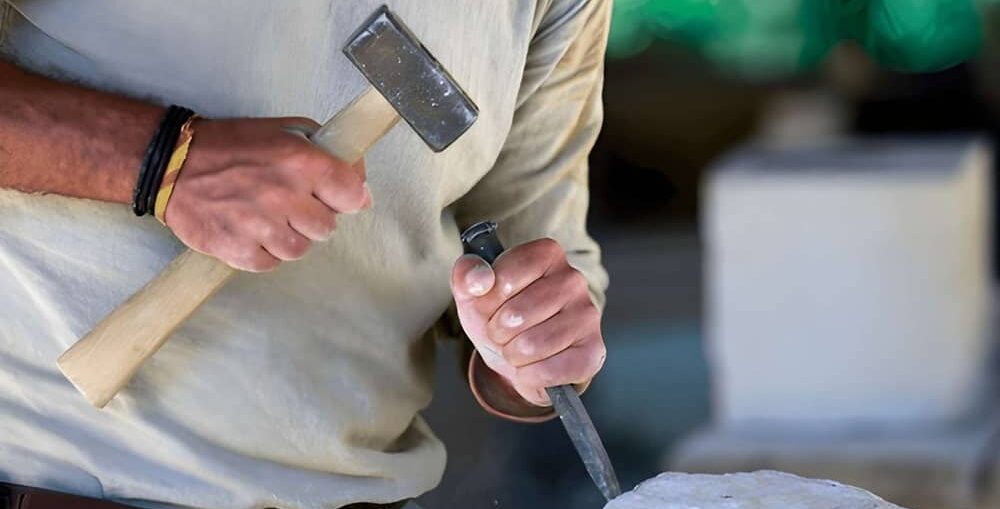
There are four chisels in a stonemason’s tool roll that look almost identical, until you put them to work and discover they do quite different things.
The bolster, pitcher, point, and claw chisels each cut stone in different ways. Use the wrong tool and you can chip a stone’s edge, and you can’t take that back. Knowing which chisel to use to rough out a block, or chase a fine finish, can make the difference between a good day’s work and a wasted afternoon.
At Diamach, we’ve spent 25-plus years supplying Sydney stonemasons with the hand tools that hold up to daily site use, so we know these distinctions matter on site, not just on paper. Here’s how each chisel earns its place in the kit.
Stone chisels are specialised instruments designed for a specific type of cutting. They range from heavy bulk removal of stone to fine finishing.
Here is a quick breakdown of what each specific tool is used for in stonemasonry, before we go into more detail:
**Always wear safety goggles, a dust mask, ear protection, and thick leather gloves when striking stone.**
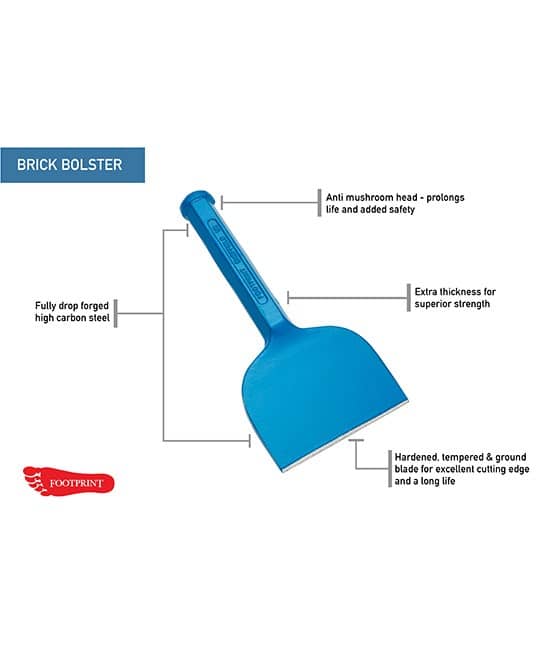
The bolster chisel has a wide blade and is used by masons and bricklayers to cleanly split, square, and trim bricks and soft stone. They use a pencil or a marker to put a line where the desired cut needs to go. They then score that line by lightly tapping the bolster chisel along it. This makes a shallow groove, or score line, along the stone.
Then they slowly deepen the cut, working around the stone along the score line. They can repeatedly go over this line, gradually hitting the chisel harder until it is time for the final break. They give a firm, direct strike on the scored line, and this should cause the stone to break cleanly along the weakened plane.
Afterwards, they use the flat blade to chisel away high spots or any small protrusions to get as square a face as possible.
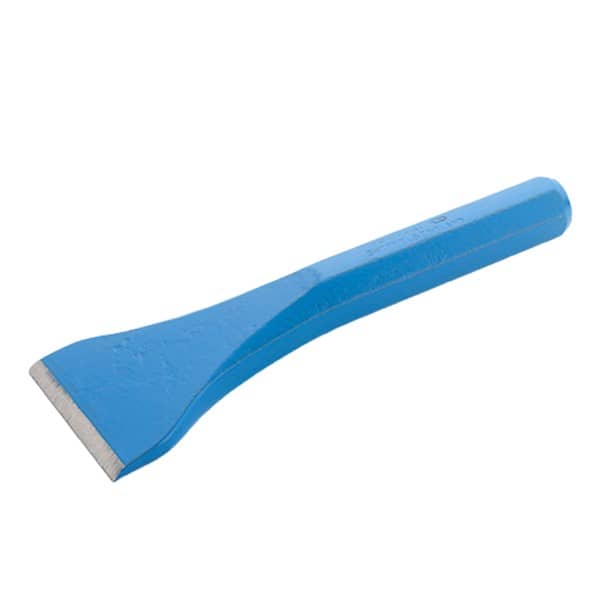
Also known as a pitcher or pitching chisel, it is a heavy chisel used to quickly chip away large chunks of stone to true-up block edges. It features a thick, single-bevelled cutting edge and a flat back that continues the line of the shaft. With the unique blade angle, masons can use a sideways, or glancing, swing with a hammer, instead of a right-angled hit. This increases the versatility of both the chisel and the mason.
These chisels are forged from durable carbon steel or fitted with wear-resistant tungsten carbide tips. This makes them effective against hard stones such as granite and bluestone.
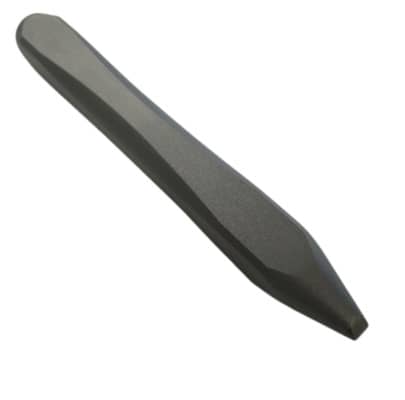
This is a heavy-duty hand tool with a pyramid-shaped tip to quickly remove large amounts of stone during the roughing-out stage. It is used on softer stones like marble or limestone. You can upgrade the tip to carbide if you’re roughing out harder stone, like granite or bluestone.
A heavy mallet or hammer is used with this type of chisel to deliver firm blows to remove stone. The chisel is held between 45 and 70 degrees to the surface of the stone. While you may have a heavy mallet, you only use light taps to remove stone in layers. You don’t want too heavy a strike in case you crack the stone deeper than you intended.
A claw chisel is a multi-toothed tool used by sculptors and masons to transition from rough-hewn stone to fine textures. It is used after either the point chisel or the pitching tool to remove high spots and uneven surfaces to produce a smooth stone plane.
It produces a textured finish, with tactile lines akin to cross-hatching in drawings. This allows an artist to rapidly ‘sketch’ contours and curves into the stone before the final smoothing process.
You only tap gently with this type of chisel, no hard blows. You don’t want to ‘bruise’ or fracture the internal crystal structure of your stone.
Choosing between carbide and steel (high-speed steel, or HSS) chisel tips depends on your skill level, the finish you need, and how much time you want to spend on maintenance.
Steel chisels are incredibly precise in their cutting and offer a smooth finish by slicing through stone. Generally, one tool can be used at different angles making them very versatile tools, and they can leave a fine surface finish that needs minimal sanding.
However, they do dull faster than carbide and require regular resharpening. Mastering a steel chisel with correct bevel angles and hand placement can take a lot of time.
A carbide tip is a hard metal insert that is mounted on a steel body. They are good for fast material removal with very little upkeep required. They act more like a scraper than a cutter, removing stone quickly through brute force. They are very beginner-friendly because you can hold them flat without worrying about angled bevel edges.
They last up to 100 times longer than steel. Carbide is brittle, so if you drop your tool you may chip or shatter it.
The scraping action of a carbide-tipped chisel can rough up the fibres of the stone, meaning extra sanding to smooth it out may be required.
A solid stone carving kit combines impact tools for roughing out shape, hand tools for finer work, and the safety gear to use them properly.
Grinders paired with tungsten carbide-tipped chisels do most of the heavy lifting, from rough shaping through to detail work.
Essential Impact and Hand Tools
Shaping and Finishing Gear
Safety Equipment
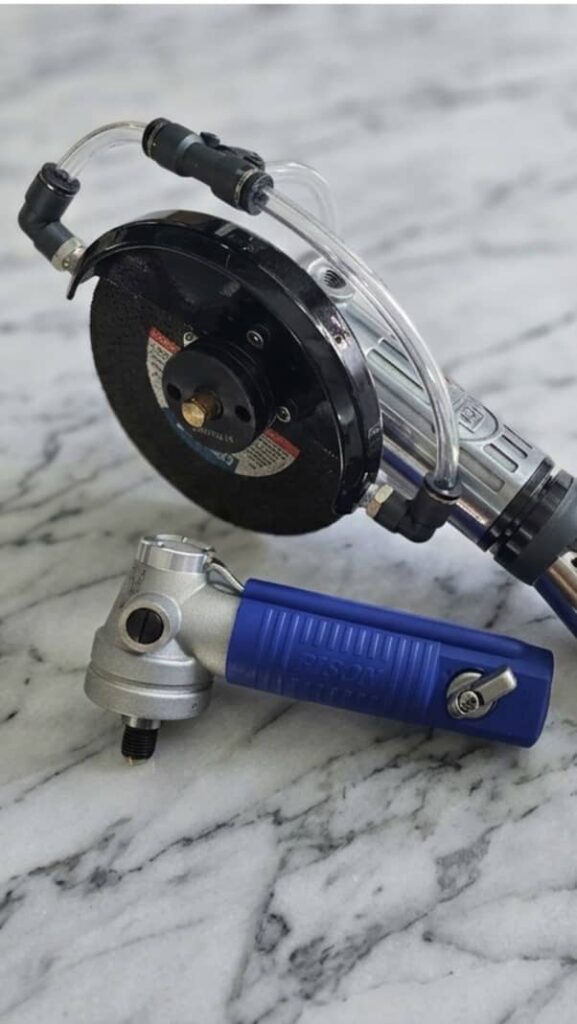
Once you know which chisel does what, the next step is making sure the tools in your kit are actually built to hold that edge. A bolster that goes blunt after one job, or a point chisel with a tip that shatters on the first hard strike, will cost you more in wasted stone and lost time than a quality tool ever would upfront.
Diamach has spent over 25 years supplying Sydney stonemasons with carbide and steel hand tools that are built for daily site use rather than occasional hobby work. Whether you’re after a single tooth chisel to round out an existing kit or a full carving and lettering starter set, the range covers everything from entry-level sets through to the TROW & HOLDEN tools favoured by professionals working granite and other hard stone.
Not sure which chisel or tip suits your project? Get in touch with the team for advice, or browse the full stonemasonry tools range online.