






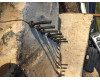
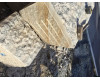
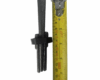

Diamach Wedge And Shims Plug And Feathers Rock and Stone Splitting Tool 16mm
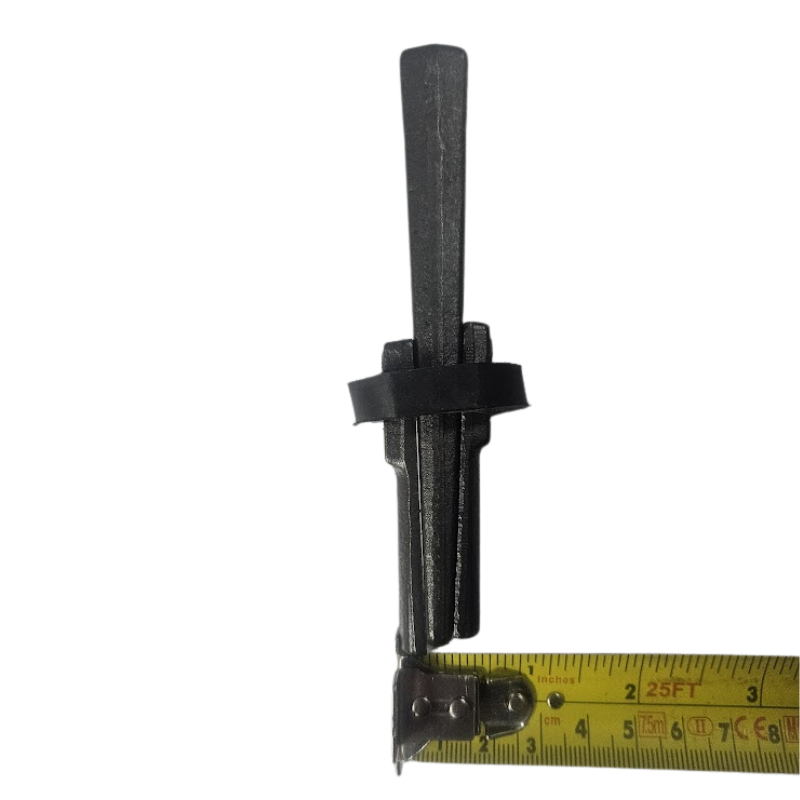
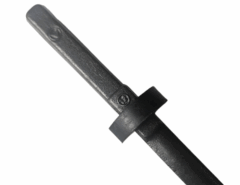
New design incorporates rubber ring to hold the set together, no more lost feathers/shims!
Longer wedge/plug for easier striking.
Great quality casting for long life.
Available in these sizes:
Diameter(mm) Length(mm)
38 320
34 290
32 280
24 190
20 190
16 125
14 125
12 125
Wedges & Shims
Guide to Splitting Stone
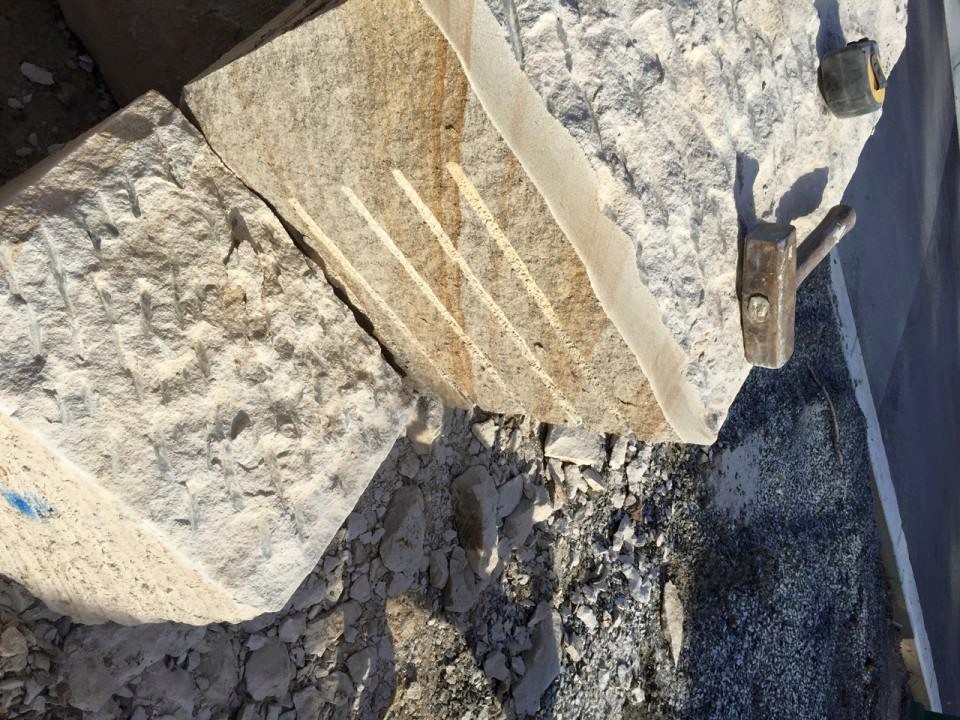
The use of wedges and shims is one of the oldest and most effective ways to split stone, whether you are trying to persuade a stone to split into a particular size and shape or simply reducing the size of a boulder to make it easier to move.
However, stone type, shape, size and other conditions can have a significant influence on how any particular stone may split. The basic steps and recommendations we have outlined below will help you achieve the best results.
Getting Started
Size Selection: Measure the height or thickness of the stone. Wedges & Shims can generally split stone up to 4-6 times the length of the wedge. (e.g., The wedge of our ¾in Wedge & Shims is 4in long, so it is reasonable to assume it can split a stone that is between 16-24in thick/high.)
Drill Bit Selection: Match the drill bit diameter to the Wedges & Shims. The “size” of the Wedges & Shims signifies the hole diameter. (e.g. ¾in Wedges & Shims require a ¾in diameter hole.) Make sure the drill bit can drill deeper than the length of the wedge.
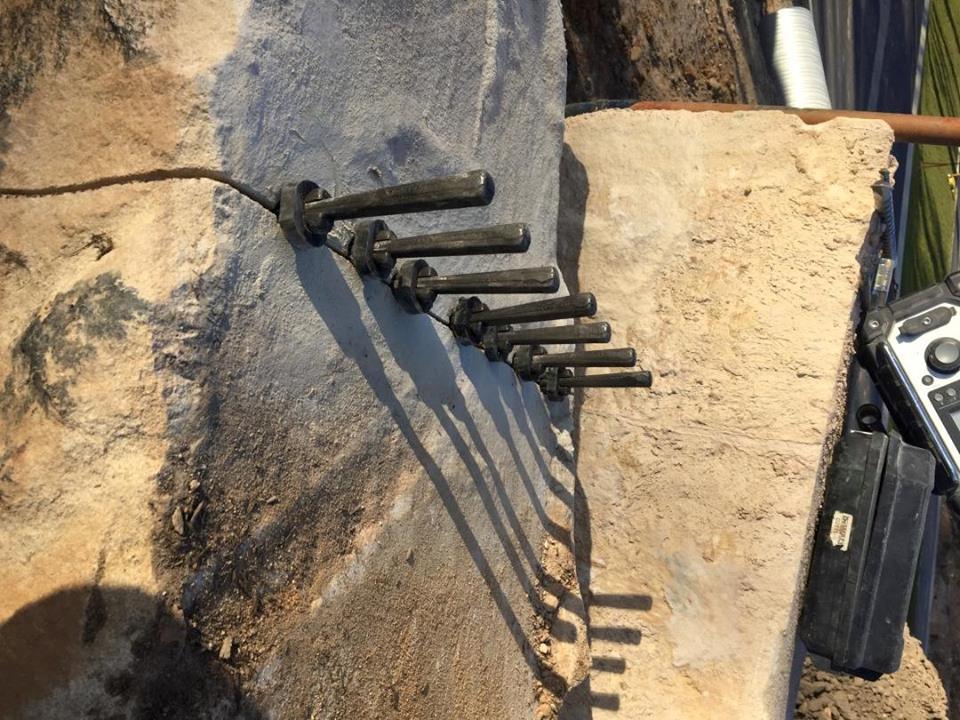
Quantities: Wedges & Shims generally need to be placed every 4-6in along the “top” of the split plane. If splitting a rounded boulder, holes would be drilled every 4-6in in an “arch” across the top of the stone. Placing Wedges & Shims down the sides of the stone can help promote a straighter split through the stone.
**NOTE FOR SOFT STONE OR DIFFICULT SPLITS: Consider drilling holes closer together and/or deeper into the stone to help weaken the stone along the split plane. This may also help increase the splitting capacity of the Wedges & Shims when faced with a difficult or precise split, or when circumstances limit the hole diameter that can be drilled.
Preparing the Stone
Stone Location: If possible, position the stone (or choose a split plane) that will allow an isolated portion of stone to fall away from your split. (e.g. Place the stone on a piece of lumber to create a fulcrum on the bottom side of the split plane.) When splitting stones that are partially buried or splitting off sections of ledge/bedrock, expose as much of the stone as possible and focus on splitting off fully exposed sections of stone.
Layout Holes: Use a straight edge to mark hole locations very 4-6in on-center across the top and sides of the stone (if necessary). This will establish your intended split plane. Keep the first and last holes about 4-6in away from the outside edges of the stone.
Drilling Holes: Hold drill upright and steady during drilling to ensure each hole is plumb or drilled along the same split plane. Drill holes at least 1/4in deeper than the length of the wedge. Clear the holes of any excess stone dust.
Making the Split
Wedge & Shims Placement: When properly positioned, about 2/3rds of the wedge should protrude above the hole from between the two shims. It is helpful to preassembling the Wedges & Shims in this position before placing them in the hole. Make sure the shims are positioned perpendicular to the split line (i.e. not facing hole to hole).
Splitting: Use a light hammer to start tapping the wedges in sequence, firmly but without forcing, to build gradual, even pressure along the entire line of Wedges & Shims. Aggressive or forceful hammering will cause unnecessary damage and wear to the Wedges & Shims. If the wedges become too firm before a crack develops, allow the Wedges & Shims to briefly “rest” before continuing to drive the wedges into the stone.



I asked the Diamach Team a question before purchasing and they gave me a great, informative response. I was then able to purchase the correct equipment, followed their directions and perfect! Am now having lots of rock splitting fun. Thank you for the wonderful customer service.
Only used these on 1 job so far, they seem to work well though
Overnight deliver was fantastic. Thanks.
Fantastic customer service and delivery. Highly recommended.