HomeA Working Stonemason’s Hand Tool Kit, Tool by Tool
A Working Stonemason’s Hand Tool Kit, Tool by Tool
20th Aug 2026
Walk into a workshop or a job site and you can often tell how long someone has been a stonemason just by looking at their kit and what’s inside the bag. A beginner’s kit is often a mix of whatever tool was available, while an experienced stonemason’s kit, built up over years of experience, is deliberate. Every hammer, chisel and blade, has earned its place through use, not guesswork.
This guide breaks the kit down tool by tool, covering what a Sydney stonemason actually needs to carve, cut, shape, and finish stone to a professional standard, along with the extras that round out a proper setup once the core tools are covered.
Hammers and Mallets
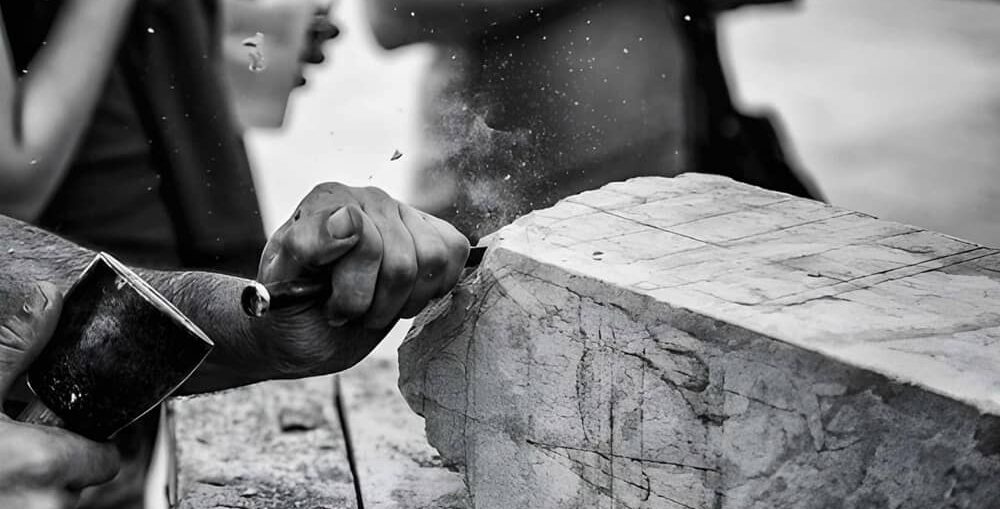
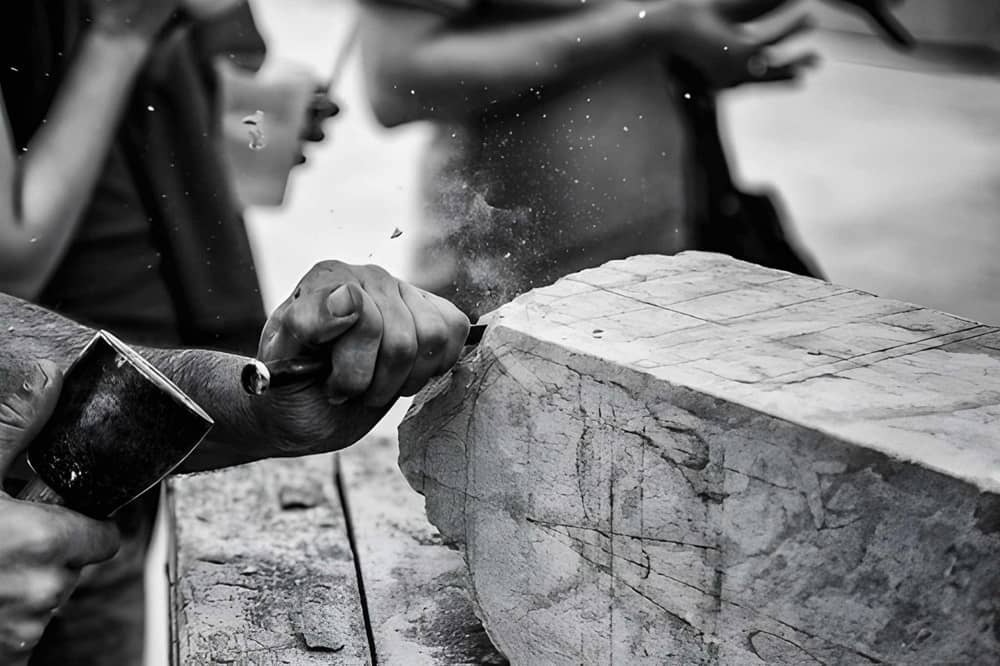
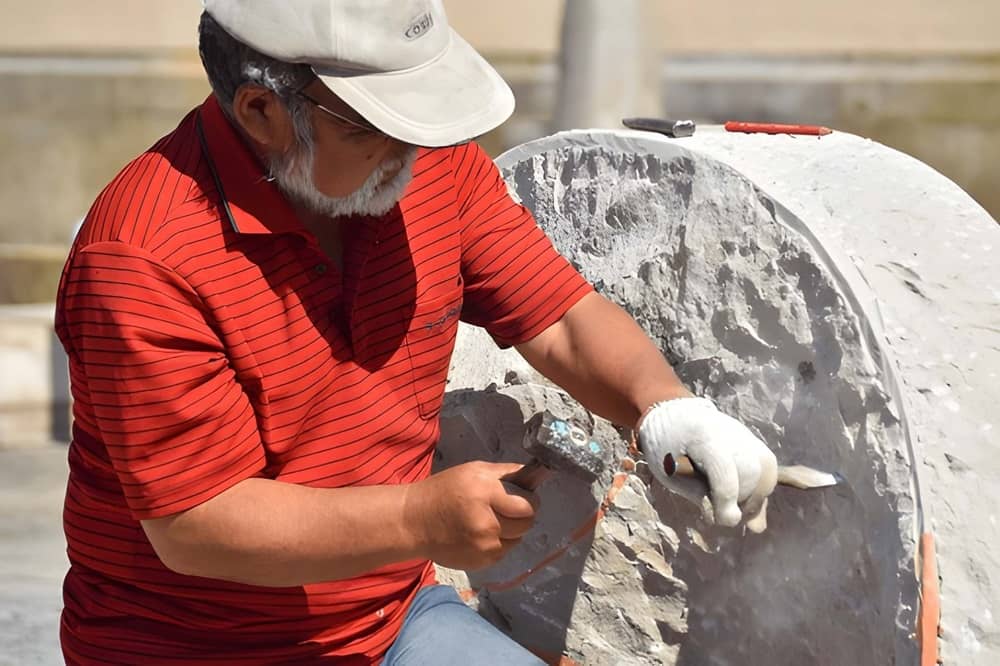
A working stonemason’s hand tool kit carries implements for striking chisels. Seeing a stonemason with a hammer and chisel seems to be ‘the image’ everyone remembers. But did you know it’s not just a matter of having a mallet? There are different kinds of hammers and mallets for different jobs.
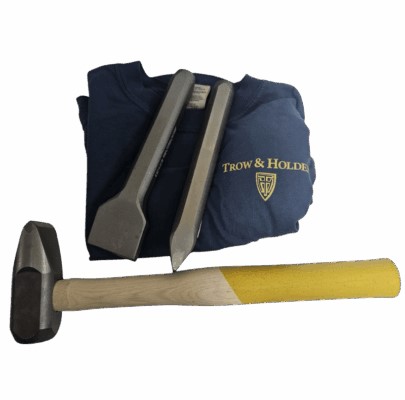
> Mash Hammers: Traditional fully-hardened striking hammers (such as 2lb to 4lb, or 1kg to 2kg) used for general shaping and splitting stone along grain lines.
> Stone Busters: Dual-purpose splitting and striking hammers featuring vertical or horizontal carbide-tipped blades.
> Nylon Mallets: Round, traditional-shaped mallets (offered in 100mm, 125mm, and 150mm sizes) paired with Australian ash handles for controlled, repetitive chisel strikes.
> Italian Stone Hammers: Compact round-headed hammers (around 400g) ideal for lighter carving and lettering work.
Chisels
Carbide-tipped pitching tools, punches, points, and tooth chisels form the backbone of a stonemason’s chisel kit. As some of the most essential stonecarving tools Sydney stonemasons use daily, each one is built for shaping, roughing, and detailing natural stones like sandstone and marble.
Core Components of a Hand Stonemasonry Kit
> Pitching Tools: Heavy, flat-faced chisels used with a mallet to knock off large, unwanted chunks of stone along a defined line to square block edges.
> Points (Point Chisels): Tapered rods ending in a sharp point used to aggressively break down high spots and rough out the initial shape of the stone.
> Punches: Thick, blunt-ended striking tools used to fracture stone downward rather than cutting across it.
> Tooth Chisels (Claw Chisels): Multi-pointed blades that follow point work to level out ridges and leave a textured, parallel-grooved surface.
> Lettering and Carving Chisels: Narrow, flat-faced tungsten-carbide blades (ranging from 6mm to 12.7mm) utilised for fine detail work and inscriptions.
Splitting and Cutting Tools
For splitting and cutting stone by hand, wedge and shim sets (also known as plugs and feathers) remain one of the most traditional and reliable stone cutting tools Sydney stonemasons have used for generations, alongside diamond blades and carbide-tipped chisels for cleaner cuts on harder stone.
Plug and Feathers (Wedges and Shims)
> Anatomy: Each set includes one centre wedge (the plug) and two side shims (the feathers). Modern Diamach Plug and Feathers feature an integrated rubber ring to keep the three-piece set together and prevent lost components.
> Sizes: Diameters range from 12mm up to 38mm, with wedge lengths matching hole depths from 125mm to 320mm.
> Function: Placed sequentially into pre-drilled holes along a marked split plane to fracture hard rock safely and cleanly via controlled hammer strikes.
Cutting and Shaping Hand Tools
> Carbide Chisels and Points: Used alongside a stone buster or masonry mallet to score lines, rough out faces, and trim edges.
> Hand Saws and Diamond Blades: While traditional hand saws exist for soft stones, modern stonemasons rely heavily on specialised thin-kerf diamond blades (such as soft or hard bond flush-cut variants) mounted on grinders for precision cutting.
Measuring and Marking Tools
Precision starts with a good layout. Steel squares, straight edges, scribes, and dividers let a stonemason mark accurate lines and angles before a single chisel touches the stone, keeping cuts, joints, and profiles true to the plan.
Essential Measuring Tools
> Metal straight edge: Checks flat planes and block alignment.
> Spring dividers: Scribes circles, arcs, and steps off equal measurements.
> Box trammel / Trammel points: Lays out large radii and arcs when a standard compass is too small.
> Mason’s pencil / Chalk line: Marks temporary guidelines on block faces.
Finishing and Dressing Tools
For finishing and dressing natural stone, a stonemason’s tool kit relies on Italian-crafted stone rifflers and rasps (such as those by Renzo Milani) and flexible silicon carbide or diamond hand sanding blocks. These components smooth tool marks, refine profiles, and hone surfaces on marble, limestone, and sandstone.
Rasps and Rifflers
> Dual-Ended Stone Rifflers: Hand-crafted in Italy with individually punched teeth, these profiles (ranging from 6-inch/150mm to 13-inch/325mm) allow access to tight corners, curves, and sculptural details.
> Selection Numbers: Different riffler shapes (e.g., No. 2, No. 3, No. 4, No. 6) provide varying flat, curved, or pointed profiles for intricate contours.
Abrasive and Polishing Blocks
> Silicon Carbide Hand Blocks: Traditional carborundum blocks used wet or dry to rub down flat areas, smooth arrises, and remove coarse chisel scars.
> Diamond Hand Sanding Blocks: Foam-backed modern blocks (available up to high fine grits like 3000 grit) used for final edge work, pencil edges, and arris tidying on stone and tile.
Protective and Support Gear
When outfitting a working stonemason’s hand tool kit, essential protective and support gear includes heavy-duty safety glasses, industrial ear protection, a high-filtration respirator for fine stone dust, reinforced work gloves, and organisational tool rolls.
Core Protective Gear
> Safety Glasses: Impact-resistant eyewear to protect against flying stone chips and splinters.
> Respirators: High-grade masks or half-face respirators to filter out crystalline silica dust generated during chiselling and carving.
> Ear Protection: Earplugs or earmuffs to guard hearing against the constant noise of metal and stone striking together.
> Work Gloves: Durable leather or reinforced gloves to protect hands from abrasions, though often removed for fine precision tactile work.
> Heavy-Duty Vibration-Dampening Gloves: Protect hands from nerve fatigue and hand-arm vibration syndrome (HAVS) during prolonged hammering or grinding.
Support and Organisation Gear
> Canvas/Leather Tool Rolls: Multi-pocket storage rolls (such as Italian or canvas tool rolls) designed to keep carbide chisels and hammers organised, secure, and protected from edge damage.
> Knee Pads / Work Aprons: Heavy-duty aprons and ergonomic knee padding to support physical positioning during extended bench or on-site stone layout work.
> Sharpening Supplies: Keep diamond files or flat diamond plates handy to touch up carbide tips without reshaping the entire bevel.
Building a Kit That Lasts
A working stonemason’s kit isn’t built overnight. It’s built, piece by piece, as each hammer, chisel, and finishing tool proves its worth on the job. What starts as a handful of essentials eventually grows into a complete setup covering every stage of the work, from roughing out stone to the final polish.
If you’re putting together your first kit or filling gaps in one you’ve built over years, having the right stone working tools Sydney stonemasons trust makes all the difference to the quality and speed of your work. Explore the full range of hand tools at Diamach, or get in touch with the team for advice on your next project.